The Post-Purchase Profit Engine: How to Turn One-Time Buyers Into High-LTV Customers Without More Ads

Most ecommerce founders chase the first sale.
You optimize your homepage, refine your ads, and test your product pages until conversion rates improve.
Then you repeat the cycle.
But here is the truth most stores ignore.
The real profit does not come from the first purchase.
It comes from what happens after.
If your store treats the post-purchase experience like a receipt and a shipping email, you are leaving serious revenue untapped.
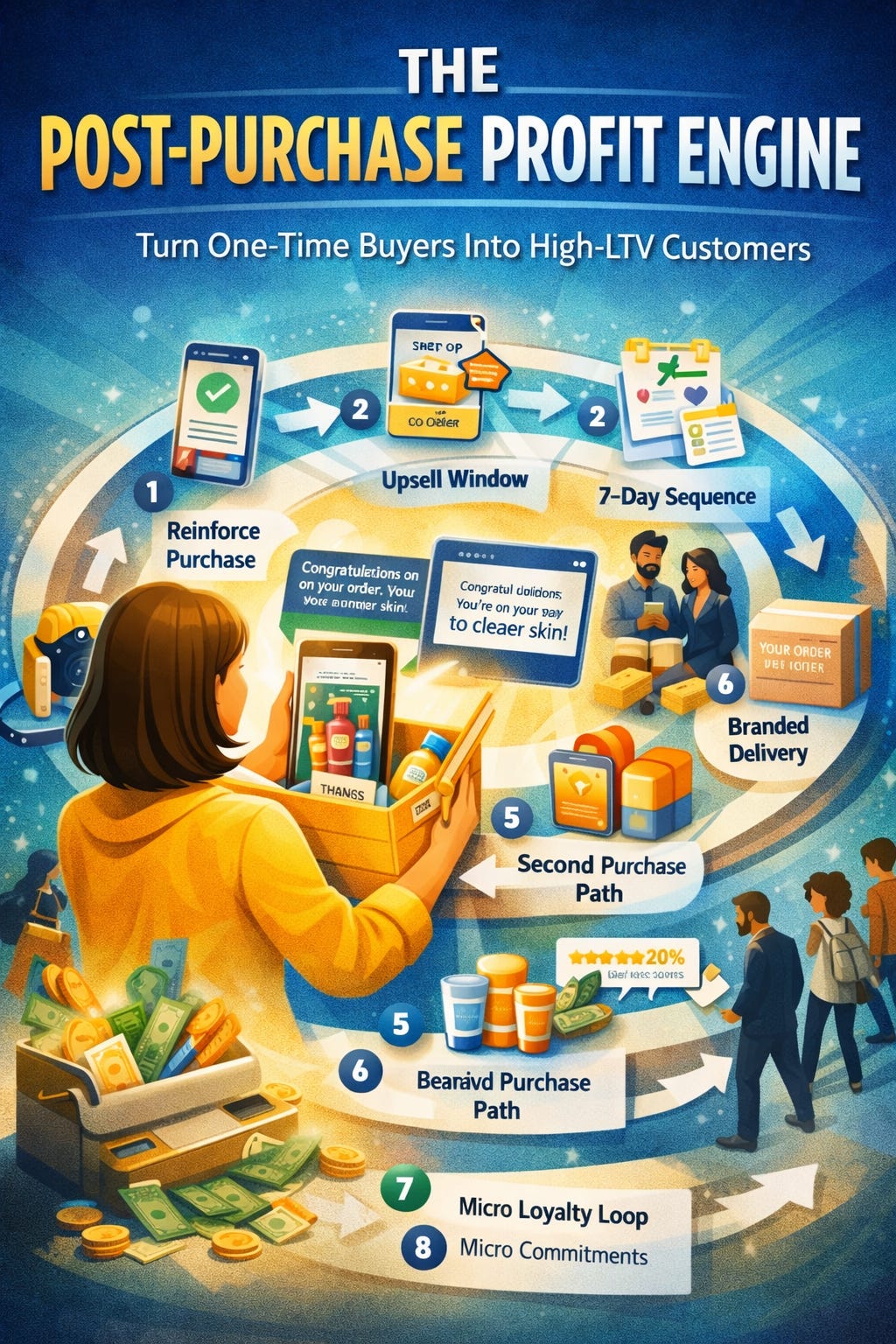
Smart ecommerce brands build a post-purchase profit engine.
They turn every order into a sequence of trust, momentum, and repeat buying behavior.
If you do this right, you increase lifetime value, stabilize cash flow, and reduce your dependence on paid traffic.
Let’s break down how to build it.
Why Post-Purchase Matters More Than Acquisition
Acquisition is expensive.
Ad costs rise. Competition increases. Margins shrink.
But once a customer buys from you, the dynamic changes.
You already have their trust.
You already have their attention.
You already have their payment information.
That means your next sale is easier, faster, and more profitable.
Yet most stores ignore this window.
They send a generic confirmation email, then go silent.
That gap kills momentum.
The best brands treat the moment after purchase as the beginning of the real funnel.
Step 1: Reinforce the Buying Decision Immediately
After a customer checks out, doubt often creeps in.
Did I choose the right product? Was it worth it?
If you do nothing, that doubt grows.
If you act quickly, you strengthen the decision.
Your confirmation page and email should do more than confirm the order.
They should reassure the customer.
Include a short message that reinforces the outcome they just bought.
For example, instead of saying “Your order is confirmed,” say “You are one step closer to clearer skin” or “Your recovery routine just improved.”
This shift seems small, but it anchors the purchase emotionally.
Confident customers are far more likely to buy again.
Step 2: Introduce a Strategic Upsell Window
Most upsells happen before checkout.
That is a mistake.
Customers are most open to buying more right after they commit.
Their resistance is low. Their trust is high.
Use a post-purchase upsell page that appears immediately after checkout.
Offer a complementary product that enhances what they just bought.
Keep it simple.
One offer. Clear benefit. Limited-time framing.
For example:
“Add this for 20% off. Ships with your order.”
No long explanations. No distractions.
When done right, this single step can increase average order value without hurting conversion rates.
Step 3: Build a 7-Day Momentum Sequence
The first week after purchase is critical.
This is when customers form their opinion about your brand.
Instead of sending random emails, build a structured 7-day sequence.
Day 1: Confirmation and reassurance
Day 2: How to use the product
Day 3: Common mistakes to avoid
Day 4: Social proof and testimonials
Day 5: Complementary product suggestion
Day 6: Brand story or mission
Day 7: Soft repeat purchase offer
Each message should feel helpful, not promotional.
You are guiding the customer, not pushing them.
This sequence builds trust while keeping your brand top of mind.
By day seven, the customer should feel like they made the right choice.
That feeling drives repeat purchases.
Step 4: Turn Delivery Into a Brand Moment
Most ecommerce brands treat delivery as a logistics step.
Top brands treat it as a marketing moment.
When your package arrives, it should reinforce your brand identity.
This does not require expensive packaging.
It requires intentional design.
Include a simple insert that does one of three things:
Educates the customer
Encourages social sharing
Promotes a second purchase
For example, a skincare brand might include a quick-start routine.
A fitness brand might include a short workout plan.
A food brand might include a recipe.
These small touches extend the experience beyond the screen.
They also increase the likelihood that customers engage with your product quickly.
Fast engagement leads to stronger satisfaction.
Step 5: Trigger Behavior-Based Follow-Ups
Not all customers behave the same way.
Some use the product immediately.
Some delay.
Some forget.
Your follow-up should adapt to these behaviors.
If a customer opens your emails but does not click, send a simplified version.
If they click but do not purchase again, send a targeted offer.
If they reorder, move them into a loyalty flow.
This approach is called behavior-based segmentation.
It allows you to meet customers where they are instead of blasting the same message to everyone.
Over time, this increases engagement and revenue without increasing effort.
Step 6: Create a Second Purchase Path
Most stores hope customers return.
Smart stores guide them back.
You need a clear path to the second purchase.
This can take several forms:
A replenishment reminder
A bundle offer
A subscription option
A limited-time return discount
The key is timing.
If your product lasts 30 days, send the reminder before it runs out.
If your product pairs well with another item, introduce it after initial use.
The second purchase is the most important one.
Once a customer buys twice, they are far more likely to become long-term.
Step 7: Capture and Leverage Micro-Commitments
Every small action a customer takes strengthens their connection to your brand.
These actions are called micro-commitments.
Examples include:
Leaving a review
Sharing a photo
Clicking a recommendation
Answering a quick survey
Encourage these behaviors early.
For example, send a simple message:
“How is your experience so far?”
Include quick response options.
This makes engagement easy.
Once customers interact with your brand, they feel more invested.
That investment increases the likelihood of future purchases.
Step 8: Build a Lightweight Loyalty Loop
Loyalty programs often fail because they are too complex.
Points, tiers, and rules can confuse customers.
Instead, build a simple loyalty loop.
For example:
Buy once, get a small reward
Buy again, unlock a better offer
Refer a friend, receive a bonus
Keep the system clear and easy to understand.
The goal is not to overwhelm the customer.
The goal is to give them a reason to return.
When customers see progress, they stay engaged.
Why This Strategy Works
The post-purchase profit engine works because it aligns with human psychology.
After a purchase, customers seek confirmation that they made the right choice.
If your brand provides that confirmation, trust increases.
If you guide them toward the next step, momentum builds.
Momentum is what turns one-time buyers into repeat customers.
Instead of restarting the funnel with every new visitor, you extend the journey for existing customers.
This reduces acquisition pressure and increases profitability.
How to Start Today
You do not need to rebuild your entire store.
Start with three changes.
First, rewrite your confirmation page so it reinforces the purchase decision.
Second, add a simple post-purchase upsell offer.
Third, create a basic 7-day email sequence that educates and guides customers.
These steps are simple, but they unlock a powerful shift.
You move from chasing sales to building relationships.
The Future of Ecommerce Growth
As ad costs rise, the brands that win will not be the ones with the best ads.
They will be the ones with the best customer journeys.
The post-purchase experience is no longer optional.
It is the difference between a store that survives and a store that scales.
When you build a system that turns buyers into repeat customers, your business becomes more predictable.
More stable.
More profitable.
And that is when ecommerce stops feeling like a constant grind and starts feeling like a real asset.